Vladimir Moiseyevich Rotshteyn
Doctor of Technical Sciences (DSc)
ORCID: https://orcid.org/0000-0002-8337-7465
e-mail:

Head of the Laboratory:
Khudaykulov Ilyos Kholmurodovich
PhD in Physics and Mathematics, Senior Researcher
e-mail: khudayqulov@iplt.uz
The Centre for Collective Use of Unique Scientific Equipment (CCUUSE), operating under the Institute of Ion-Plasma and Laser Technologies of the Academy of Sciences of the Republic of Uzbekistan named after U.A. Arifov, was established in accordance with the Resolution of the Presidium of the Academy of Sciences of the Republic of Uzbekistan No. PMK-6/1 dated February 21, 2020, in line with the Law of the Republic of Uzbekistan “On Science and Scientific Activity” No. 576 dated October 29, 2019, and the Decree of the President of the Republic of Uzbekistan No. PK-3365 dated November 1, 2017, which authorizes the Academy of Sciences of the Republic of Uzbekistan to establish “Centers for Collective Use of Scientific Equipment”.
The establishment of CCUUSE has contributed to increasing the efficiency of unique foreign scientific equipment through its centralized use, ensuring access to valuable and advanced research instruments for all scientific institutions, and saving budgetary funds by reducing the need for separate organizations to purchase the same expensive equipment.
Main activities of CCUUSE
Organization and conduct of research projects and collaborative programs within the Academy of Sciences of the Republic of Uzbekistan, as well as cooperation with universities and other interested organizations;
Collection of experimental data within state and international programs and agreements, determination of composition, and presentation of results regarding composition and other properties of substances based on experimentally obtained data upon customer request;
Participation in the implementation of tasks within state scientific and technical programs, international and innovation projects;
Execution of research, experimental-design, and technological works, improvement of existing testing and analysis methods, development of new methods, and creation of new types of measurement instruments.
In addition to meeting the current needs of the Institute of Ion-Plasma and Laser Technologies of the Academy of Sciences of the Republic of Uzbekistan in analytical research for both fundamental and applied programs and projects, CCUUSE actively collaborates with the Scientific Production Association “Physics-Sun” of the Academy of Sciences of the Republic of Uzbekistan, the Institute of Nuclear Physics, the Institute of Chemistry and Physics of Polymers, the Institute of Materials Science, the Research Institute of Semiconductor Physics and Microelectronics, the Scientific and Technical Center with Design Bureau and Experimental Production of the Academy of Sciences of the Republic of Uzbekistan, the National University of Uzbekistan, Tashkent State Technical University, Termez State University, Chirchik State Pedagogical University, the joint venture “EUROPAINT” LLC, and other organizations engaged in research of various materials using analytical methods implemented at CCUUSE.
The CCUUSE equipment park includes modern, unique, high-tech analytical instruments capable of effectively solving a wide range of research tasks.
Gas chromatography
Gas chromatography is a method for chromatographic separation and analysis of substance mixtures.
The operating principle of gas chromatographs is as follows: a liquid sample is injected through an injection system into a chromatographic column, through which a carrier gas (argon, helium, nitrogen, etc.) is continuously supplied at a constant or variable flow rate. The column is filled with a sorbent and placed in a thermostat that maintains a controlled temperature (from –99°C to 500°C). In the chromatographic column, the initial multicomponent mixture is separated. Depending on the sorption properties of the components, binary mixtures (carrier gas and sample components) pass in a specific order to the detector, where changes in the concentration of eluting components are recorded.
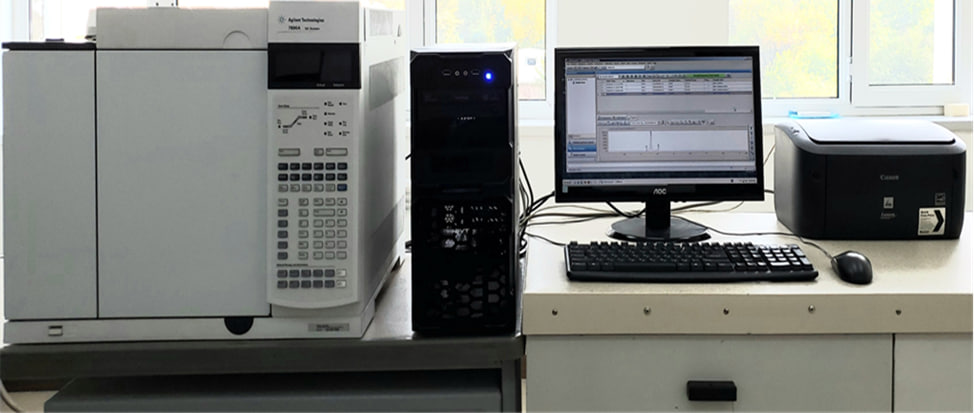
The GC 7890A Series is designed for the qualitative and quantitative analysis of volatile organic compounds in a variety of objects by chromatography. The GC 7890A Series uses a Flame Ionization Detector (FID) and a Catharometer (TCD) as detectors.The GC 7890A Series provides a minimum detectable level of <5 pkg (5 * 10-12g).
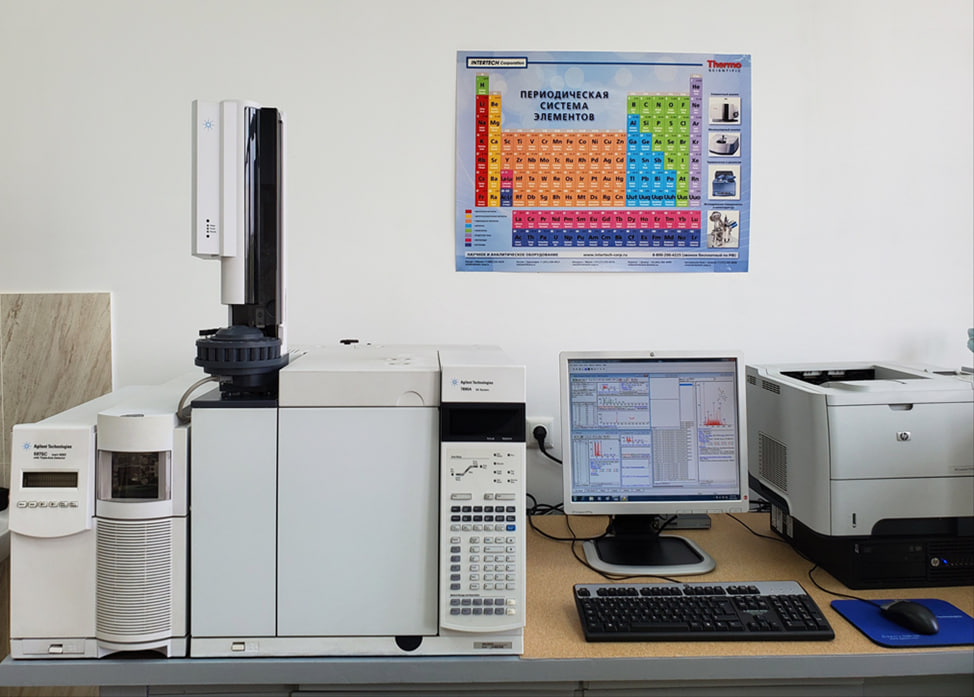
MSD is designed for the analysis of mixtures of mainly organic substances and the determination of trace amounts of substances in the volume of liquid.
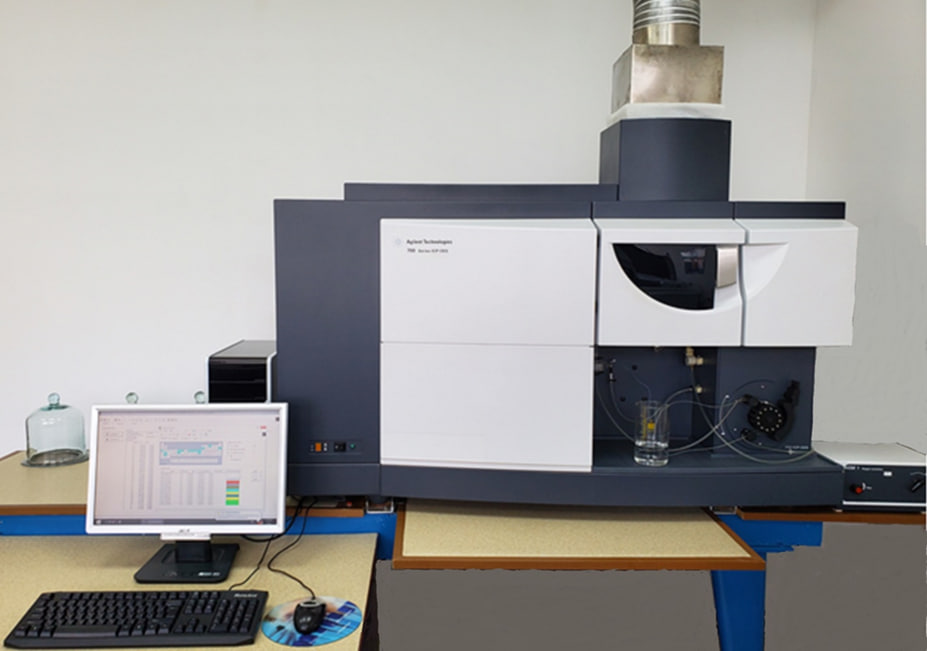
The Agilent 710 Series ICP spectrometer is designed for the simultaneous precision rapid determination of up to 73 elements of the periodic table in liquid and solid samples (in solid samples after dissolution).
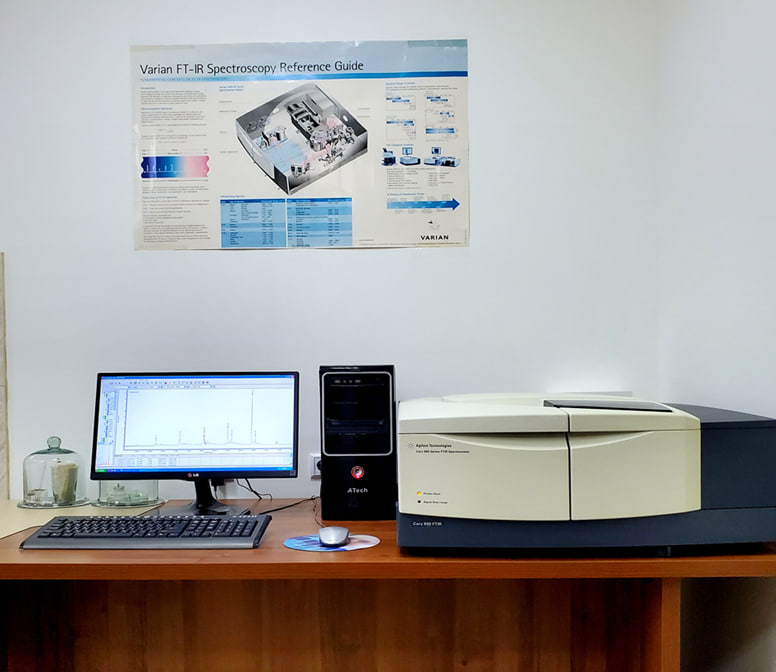
The advantages of a Fourier spectrometer, in contrast to spectrometers with diffraction gratings, prisms as dispersing elements, are a high signal-to-noise ratio, the ability to operate in a wide wavelength range without changing the dispersing element, fast spectrum registration, and high resolution.
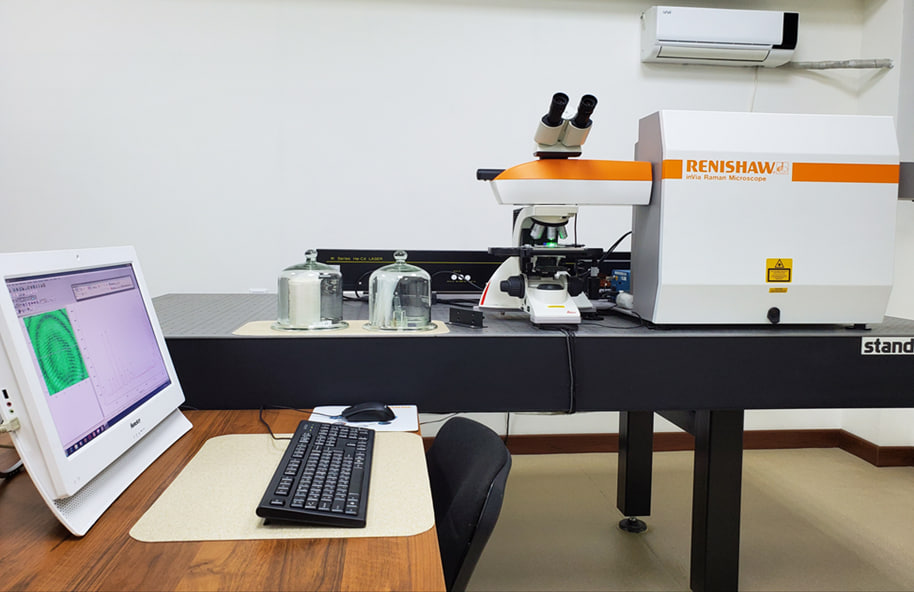
The InViaRaman spectrometer is intended for both fundamental research and structural studies of the routine nature of liquid, solid and powdery objects, including obtaining fingerprints of molecules, as well as monitoring changes in the structure of molecular bonds (for example, changes in state and stress and deformation
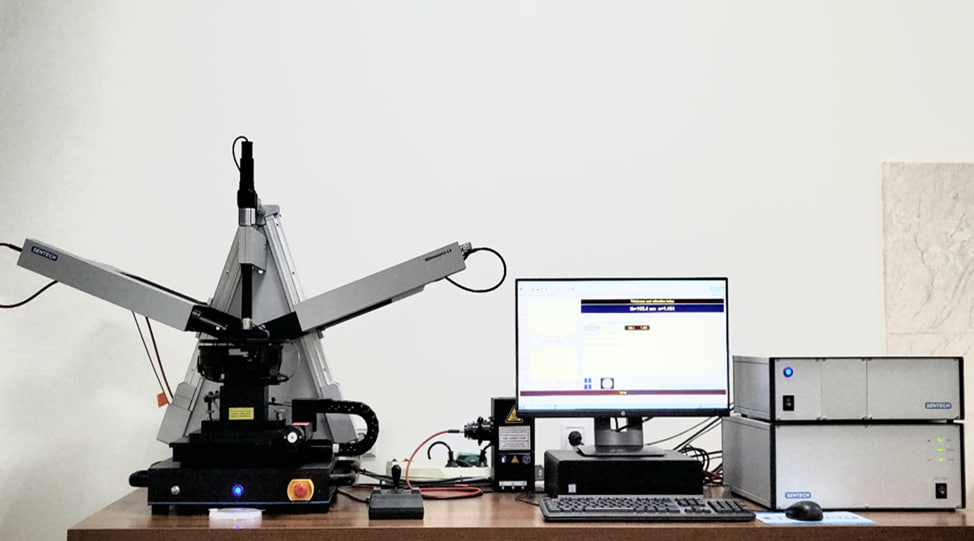
The SER 850 SENresearch 4.0 is specially designed for research with the ability to measure thicknesses of single and multilayer films and film structures at various angles and for measuring the optical characteristics of film structures (refractive index, absorption index) on various types of surfaces in the UV and visible and IR ranges. waves in the range from 240 to 2500 nm, while providing measurement of film thicknesses from 1 Å to 200 μm (ultra-thin films).
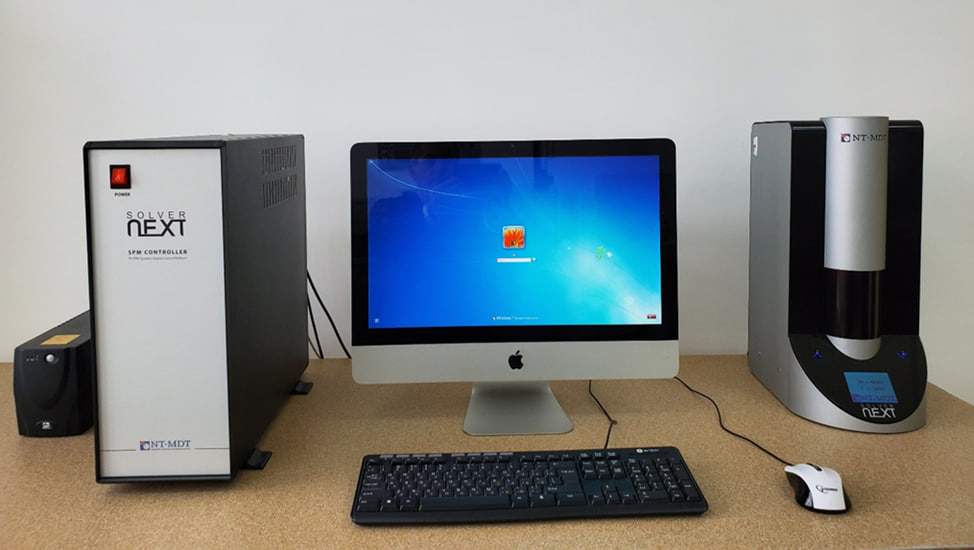
SOLVER NEXT is a multifunctional scanning probe microscope of wide application, which allows to obtain an image of the topography and topography of the surface of the investigated object. The resolution of SOLVER NEXT, depending on the used measurement method, is provided in the range of 0.1-5nm.