Laboratory of Condensed Matter Optics
1. About Us
Mission and Strategic Goals
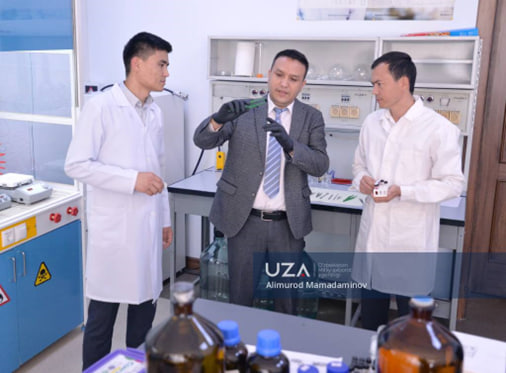
The Laboratory of Condensed Matter Optics operates within the Arifov Institute of Ion-Plasma and Laser Technologies of the Academy of Sciences of the Republic of Uzbekistan. For more than two decades the laboratory has been carrying out fundamental and applied research in laser physics, spectroscopy, and the interaction of laser radiation with biomolecules and condensed media.
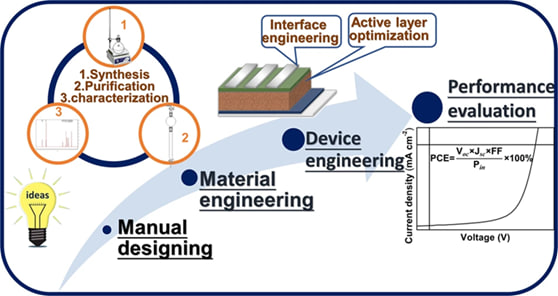
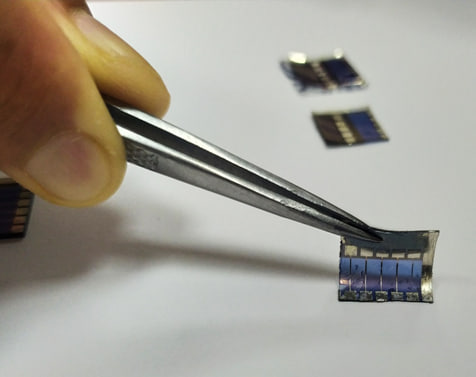
The laboratory’s principal mission is to develop a new generation of organic and perovskite solar cells, to uncover the fundamental physical mechanisms of natural and artificial photosynthesis, and to carry out research on the application of laser technologies in medicine and agriculture.
Our strategic goals are:
- to strengthen Uzbekistan’s scientific capacity in alternative and renewable energy and to ensure international competitiveness;
- to develop flexible, lightweight and low-cost organic photovoltaic technologies and to test them under local climatic conditions (high humidity, large day–night temperature swings);
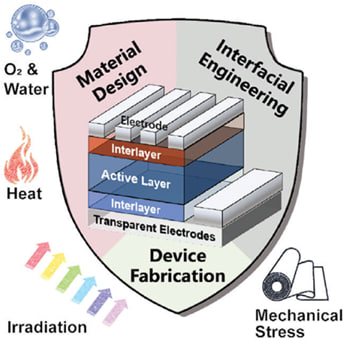
- to engineer new materials and encapsulation methods for high-stability perovskite solar cells;
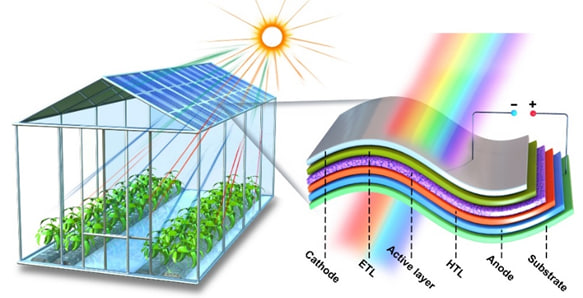
- to create stretchable and semi-transparent organic photovoltaic devices for “smart agriculture” and flexible electronics;
- to build a scientific basis for raising crop yields by studying the quantum efficiency of photosynthesis and its adaptation to stress conditions;
- to develop laser and light sources for photodynamic therapy (PDT) and antimicrobial phototherapy;
- to strengthen cooperation with leading international research centres and to train young scientists through overseas internships and joint projects.
Methodology
The laboratory’s research relies on the following experimental approaches and methods:
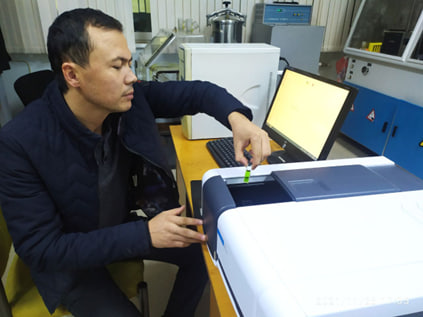
- Optical spectroscopy — absorption and photoluminescence in the UV-Vis-NIR;
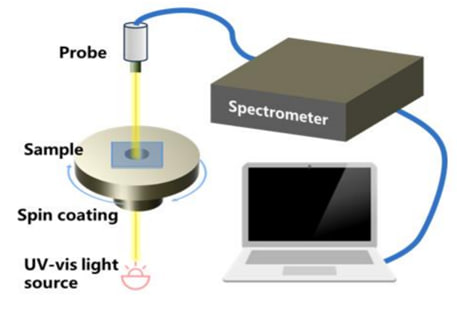
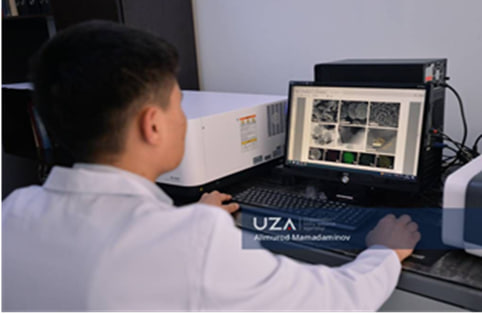
- In-situ UV-Vis absorption spectroscopy — recording spectra every 0.01 s during spin-coating to track active-layer formation dynamics in real time (solution evaporation → aggregation/nucleation → crystal growth);
- Time-resolved fluorescence spectroscopy at nano-, pico- and femtosecond timescales;
- Low-frequency photoacoustic spectroscopy based on a gas-microphone detection scheme, separating the photothermal and photobaric components;
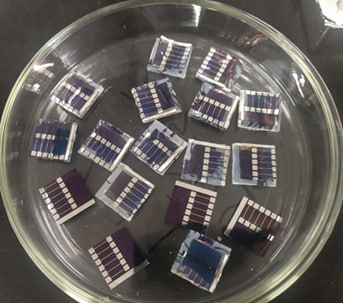
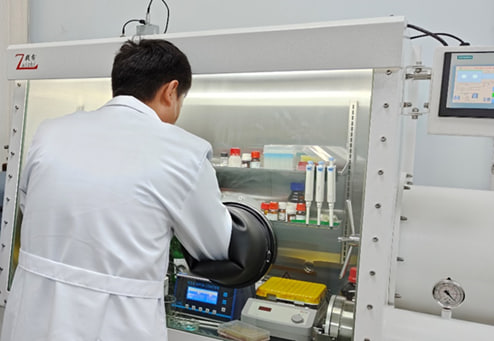
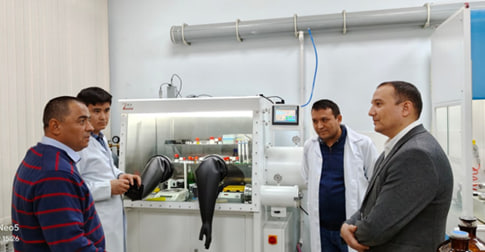
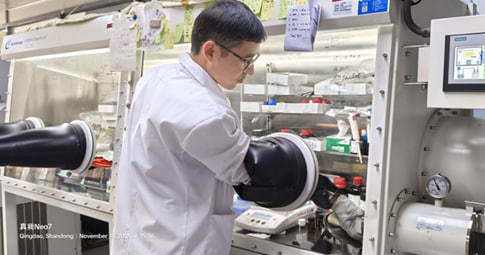
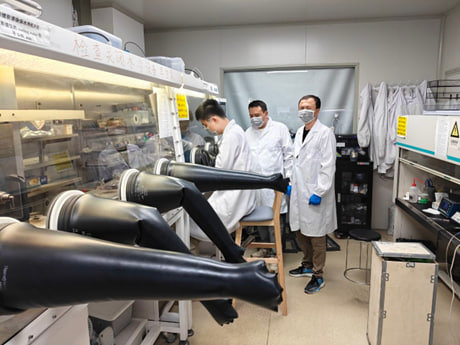
- Spin-coating thin-film deposition and full device assembly inside a dedicated Argon Glove Box;
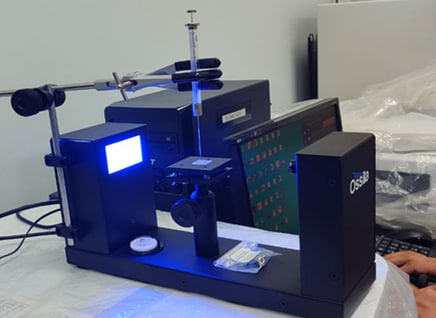
- Goniometric measurements — surface energy and contact angles using a Contact Angle Goniometer L2004A1 (Osilla, UK);
- Flory–Huggins parameter (χ) calculation — using the Wu model to evaluate donor/acceptor miscibility and aggregation;
- GIWAXS (Grazing Incidence Wide-Angle X-ray Scattering) — for crystallinity, π–π stacking distance and molecular ordering in thin films (with foreign partner centres);
- SCLC (Space-Charge-Limited Current) — charge-carrier mobility measurements;
- AFM, SEM and FTIR — morphological and structural analysis, study of moisture-induced degradation;
- Photovoltaic characterization — J–V, EQE, long-term stability and degradation measurements;
- Laser–fiber interferometry — Sagnac interferometers, dual-core fibers for nonlinear optics;
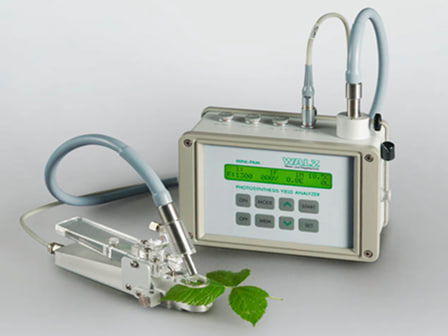
- Field-based studies — in situ MINI PAM fluorometry on agricultural crops.
Staff Composition (2025)
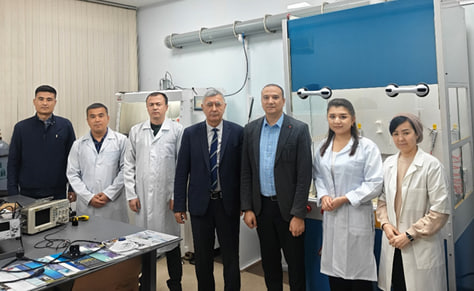
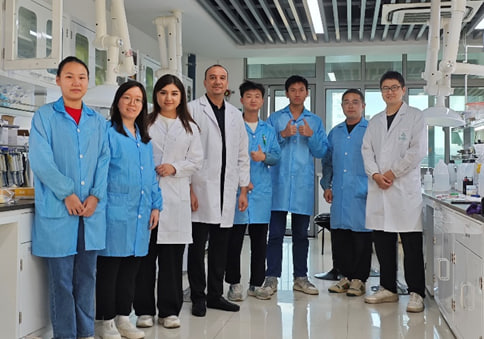
The laboratory comprises 15 staff members, with an average age of 34 years, of whom 4 hold the Doctor of Sciences (DSc) degree and 1 holds a PhD. In addition, the team actively involves doctoral candidates, trainee researchers and master’s students (from NUUz, TSPU, TSTU and KarSU). During 2024–2025, more than 5 master’s theses on the laboratory’s topics were successfully defended.
2. Research Areas
The laboratory pursues four tightly interconnected research directions:
1) Optics of organic and perovskite solar cells (Stretchable, Semi-transparent & Wearable OPV). Design and study of bulk-heterojunction and planar heterojunction photovoltaic devices based on conjugated and small-molecule donor polymers (PM6, D18, D18-SiO, BBT, PBB-TSD, BBTSM-1/2 and others) and fullerene-free acceptors (L8-Bo, Y6, IT-4F).
2) Fluorescence and photoacoustic spectroscopy of photosynthesis. Spectral-kinetic studies of chlorophyll and bacteriochlorophyll fluorescence in plant leaves and photosynthetic bacteria. Physical mechanisms of light energy absorption in the primary photoinduced events of photosynthesis.
3) Propagation of ultrashort laser pulses in nonlinear optical fibers. Single- and dual-core fibers, Sagnac interferometers, parallel-fiber directional couplers; supercontinuum generation, nonlinear optical switching, optical limiting, Kerr modulation.
4) Laser technologies in medicine and agriculture. Investigation of the absorption–fluorescence properties of photosensitizers (methylene blue and others) for PDT. New approaches to enhancing antimicrobial photodynamic effects. Development of semiconductor UV-lasers for the treatment of dermatological conditions.
3. Infrastructure and Resources
Experimental Equipment
The laboratory is equipped with modern experimental facilities, including:
- Argon Glove Box — for assembling organic and perovskite photovoltaic devices in an inert atmosphere;
- Spin-coater (600–8000 rpm) — for depositing nanoscale thin films on various substrates (ITO, quartz glass);
- In-situ UV-Vis absorption spectrometer — 300–1100 nm range, 0.01 s temporal resolution, real-time monitoring of active-layer formation during spin-coating;
- Contact Angle Goniometer L2004A1 (Osilla, UK) — for surface energy and contact-angle measurements on thin films, with Advance Drop Shape Analysis software;
- MINI PAM pulse-amplitude modulation fluorometer (Walz, Germany) — for measuring photosynthesis parameters under field conditions;
- BCI-280 boxcar integrator (ZWG, Berlin, Germany) — for picosecond-resolved pulse-profile measurements;
- RF-6000 Spectrofluorometer (Shimadzu);
- HR 2000+ Spectrophotometer (Ocean Optics);
- Laser fluorescence spectroscopy complex — with continuous, pulse-periodic, nano-, pico- and femtosecond laser sources;
- Custom-built setup for ultrasensitive delayed fluorescence;
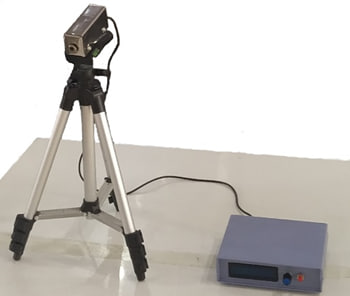
- APE-2 Analyzer of Photosynthesis Efficiency — designed in-house;
- Low-frequency photoacoustic setup — with gas-microphone detection;
- Semiconductor laser for UV-light and photodynamic therapy;
- Fiber-optic components — Sagnac interferometers, dual-core fibers;
- FTIR spectrometer — for studying moisture-induced degradation processes.
Foreign Expert Projects (2025)
- National Foreign Expert Individual Human Project — S20240008:E.A. Zakhidov;
- National Foreign Expert Individual Human Project — H20240043: DSc I.I. Tajibaev and junior researcher I.R. Boynazarov.
Completed Projects
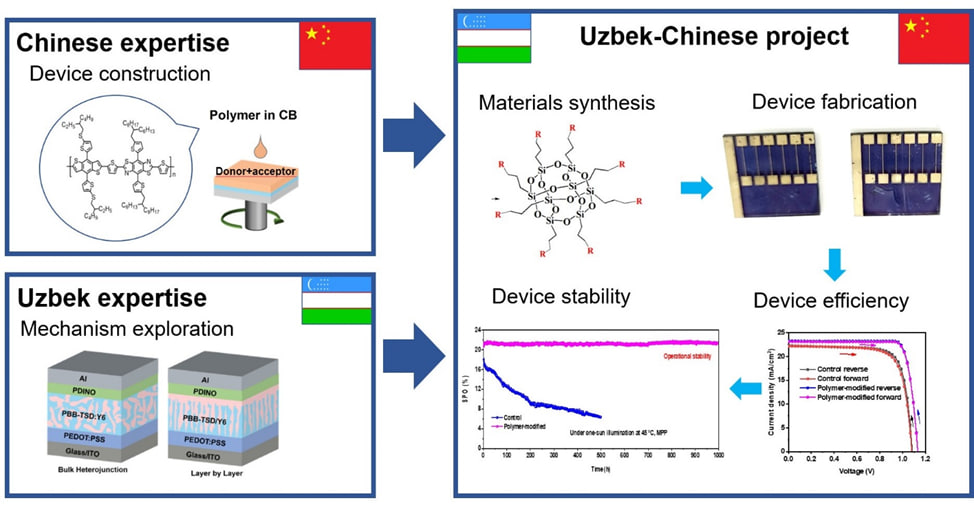
- MUK-2021-47 (2021–2023) — Flexible Organic Photovoltaics: an Emerging Portable Renewable Energy Source, Uzbekistan–China joint project.
- OT-F2-05 (2017–2020) — Processes of light excitation and charge transport in artificial photosynthesis systems.
- FA-Atex-2018-47 (2018–2020) — Development of new-generation phototherapeutic devices for use in dermatology.
- FA-A4-F047 (2015–2017) — Monitoring of photosynthesis efficiency in agricultural crops.
- Over the past 20 years, projects funded by eight prestigious foreign foundations — including CRDF (USA), STCU (Ukraine), SNSF (Switzerland) and INTAS — have been successfully completed.
Selected Publications 2022–2025
- Advanced Science (Wiley, IF ≈ 17.5) Y. He, W. Miao, T. Hu, J. Su, A. Saparbaev, E. Wang, X. Wang, R. Yang. Siloxane Decorated Water-Obstructing Guest for Efficient Air-Processed OSCs. Volume 12, Issue 15, 2412190, 17 April 2025. DOI: https://doi.org/10.1002/advs.202412190
- Matter (Cell Press, IF ≈ 17.3) S. Li, J. Liu, V. Kuvondikov, J. Yan, L. Ye. Organic photovoltaics generate more power under stretching. Volume 8, Issue 4, 102062, 2 April 2025. DOI: https://doi.org/10.1016/j.matt.2025.102062
- Advanced Functional Materials (Wiley, IF ≈ 18.8) J. Chen, Y. Wu, L. Chen, Y. Liao, Y. Zhu, A. Saparbaev, M. Wan, Y. Li, H. Xiang, A. Saidkulova, X. Wang, R. Yang. “1+2” Alloy-Like Strategy: Restricting Molecular Diffusion Enables Highly Thermally-Stable and Efficient Organic Solar Cells. e08397, 2025. DOI: https://doi.org/10.1002/adfm.202508397
- SusMat (Wiley, IF ≈ 23.6) Y. Liao, H. Xiang, T. Hu, A. Saparbaev, X. Zheng, S. Hu, Q. Xiao, B. Xiao, E. Wang, X. Wang, R. Yang. Dual liquid rubber matrix based highly efficient and mechanically robust layer-by-layer organic solar cells. Volume 5, Issue 2, e70005, 2025. DOI: https://doi.org/10.1002/sus2.70005
- Materials Horizons (RSC, IF ≈ 13.3) K. Zhang, M. Gao, J. Wu, C. Sun, W. Zhao, D. Urazkulova, V. Kuvondikov, S. Nematov, L. Ye. Cost-effective poly(3-alkylthiophene)-based organic photovoltaics: advancing solar energy conversion and photodetection technologies. Volume 12, Issue 21, 8832–8861, 2025. DOI: https://doi.org/10.1039/D5MH01115A
- Small (Wiley, IF ≈ 13.3) D. Ding, X. Xu, F. Li, A. Saparbaev, E. Zakhidov, M. Sun. High Performance Deep Blue Organic Room Temperature Phosphorescence: 4.64 s Ultra-Long Lifetime and 60.4% Quantum Efficiency Balanced by Simple Phosphor Heteroatom Modulation. e03142, 2025. DOI: https://doi.org/10.1002/smll.202503142
- Science China Materials (Springer Nature, IF ≈ 7.0) C. Sun, S. Li, V. Kuvondikov, S. Nematov, L. Ye. Unlocking Intrinsic Stretchability in PM6-Based Materials for Next-Generation Solar Cells: Challenges and Innovations. 2025. DOI: https://doi.org/10.1007/s40843-025-3406-2
- Polymers (MDPI, IF ≈ 5.0) X. Jing, X. Li, Y. Zhao, X. Liu, A. Saparbaev, F. Li, M. Sun. Effects of additional flexible and rigid structure on BDT-BDD terpolymer and the performance of organic solar cells. Volume 17, 248, 2025. DOI: https://doi.org/10.3390/polym17020248
- Materials Letters (Elsevier) K. Song, L. Wang, D. Han, Z. He, A. Saparbaev, U.K. Makhmanov, E. Zakhidov, M. Sun. Tailored asymmetric chain strategy for liquid crystal photovoltaic donors to optimize phase behavior and annealing process. Volume 396, 138761, 2025. DOI: https://doi.org/10.1016/j.matlet.2025.138761
- Dyes and Pigments (Elsevier) D. Han, S. Wen, K. Song, J. Lv, C. Yang, T. Zhuang, A. Saparbaev, M. Sun, X. Bao. Benzobisthiazole and rhodanine based low energy level small molecule donors for organic solar cells. Volume 234, 112564, 2025. DOI: https://doi.org/10.1016/j.dyepig.2024.112564
- Applied Solar Energy / Гелиотехника (Springer) E.A. Zakhidov, M.A. Zakhidova, F.M. Ruziev, A.A. Saparbaev. Semi-transparent polymer solar cells: developments and prospects. Volume 60, No. 3-4, pp. 224–232, 2025.
- Chemical Engineering Journal (Elsevier, IF ≈ 15.1) E. Zakhidov, V. Kuvondikov, A. Saparbaev, D. Han, S. Wen, F. Bi, C. Yang, M. Sun. Small molecular donor materials based on electron withdrawing benzobisthiazole core unit enable an efficiency of 11.8% for organic solar cells. Volume 463, 142400, 2023.
- Solar RRL (Wiley, IF ≈ 7.9) H. Ke, M. Gao, S. Li, X. Li, S. Li, V. Kuvondikov, P. Lv, Q. Wei, L. Ye. Advances and Future Prospects of Wearable Textile- and Fiber-Based Solar Cells. Volume 7, Issue 15, 2300109, 2023.
- Materials Chemistry Frontiers (RSC, IF ≈ 6.4) J. Wang, J. Liu, H. Yin, S. Li, V. Kuvondikov, L. Ye. Advances and Perspectives in Eco-friendly and Ultrathin Solar Cells Featuring Nanocrystals. Volume 7, 4693–4706, 2023.
- Applied Solar Energy (Springer) E.A. Zakhidov, Sh.K. Nematov, A.A. Saparbaev, I.I. Tazhibaev, M.A. Zakhidova, A.Y. Turgunboev, B.G. Khidirov. N-Methyl-2-Pyrrolidone as an Efficiency and Stability Additive for Perovskite Solar Cells. Volume 59, Issue 4, 435–440, 2023.
- Journal of Applied Spectroscopy (Springer) E.A. Zakhidov, Sh.K. Nematov, A.A. Saparbaev, L.R. Nurumbetova, B.G. Khidirov, A.Yu. Turgunboev. Structural and photoelectric properties of CsPbI₃ perovskite solar elements made with added hydroiodic acid. Volume 90, Issue 4, 830–836, 2023.
- Energy & Environmental Science (RSC, IF ≈ 39.3) J. Yang, Q. Cao, T. Wang, B. Yang, X. Pu, Y. Zhang, H. Chen, I. Tojiboyev, Y. Li, L. Etgar, X. Li, A. Hagfeldt. Inhibiting metal-inward diffusion-induced degradation through strong chemical coordination toward stable and efficient inverted perovskite solar cells. Volume 15, Issue 5, 2154–2163, 2022.
- Energy & Environmental Science (RSC, IF ≈ 39.3) Z. Li, X. Wang, N. Zheng, A. Saparbaev, J. Zhang, C. Xiao, S. Lei, X. Zheng, M. Zhang, Y. Li, B. Xiao. Over 17% efficiency all-small-molecule organic solar cells based on an organic molecular donor employing a 2D side chain symmetry breaking strategy. Issue 10, 4003–4428, 2022.
- Applied Catalysis B: Environmental (Elsevier, IF ≈ 19.5) P. Guo, S. Cao, Y. Wang, X. Lu, Y. Zhang, X. Xin, X. Chi, X. Yu, I. Tojiboyev, H. Salari, A. Jorg, S. Sobrido, M. Titirici, X. Li. Surface self-reconstruction of telluride induced by in-situ cathodic electrochemical activation for enhanced water oxidation performance. Volume 310, 121355, 2022.
- Advanced Functional Materials (Wiley, IF ≈ 18.8) Q. Cao, T. Wang, J. Yang, Y. Zhang, Y. Li, X. Li, I. Tojiboyev, J. Chen, L. Etgar, H. Salari, X. Li. Environmental-Friendly Polymer for Efficient and Stable Inverted Perovskite Solar Cells with Mitigating Lead Leakage. Volume 32, Issue 32, 2201036, 2022.
- Nano Energy (Elsevier, IF ≈ 17.9) X. Wang, C. Xiao, X. Sun, A. Saparbaev, M. Zhang, Y. Yu, B. Xiao, C. Yang, R. Yang. Hammer throw-liked hybrid cyclic and alkyl chains: a new side chain engineering for over 18% efficiency organic solar cells. Volume 101, 107538, 2022.
- Journal of Energy Chemistry (Elsevier, IF ≈ 9.7) X. Pu, J. Yang, T. Wang, S. Cheng, Q. Cao, J. Zhao, H. Chen, Y. Zhang, T. Xu, I. Tojiboyev, H. Salari, X. Li. Gadolinium-incorporated CsPbI₂Br for boosting efficiency and long-term stability of all-inorganic perovskite solar cells. Volume 70, 9–17, 2022.
- Advanced Materials Interfaces (Wiley, IF ≈ 6.1) X. Xin, J. Yang, X. Pu, Y. Li, Q. Cao, Y. Zhang, I. Tojiboyev, H. Salari, F. Ye, X. Li. Multifunctional Molecule-Modified SnO₂–Perovskite Interface for Efficient Planar Perovskite Solar Cells. Volume 9, Issue 14, 2200102, 2022.
- Solar RRL (Wiley, IF ≈ 7.9) J. Huang, S. He, W. Zhang, A. Saparbaev, Y. Wang, Y. Gao, L. Shang, G. Dong, L. Nurumbetova, G. Yue, Y. Tu. Efficient and Stable All-Inorganic CsPbIBr₂ Perovskite Solar Cells Enabled by Dynamic Vacuum-Assisted Low-Temperature Engineering. Volume 6, Issue 4, 2100839, 2022.
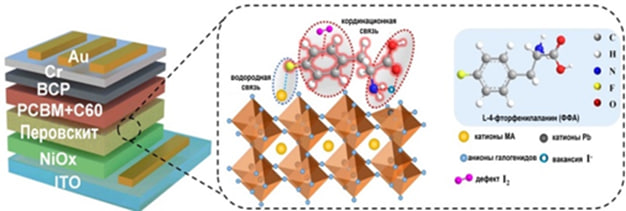
- Solar RRL (Wiley, IF ≈ 7.9) J. Yang, X. Pu, T. Wang, S. Cheng, H. Chen, Q. Cao, Y. Zhang, I. Tojiboyev, L. Etgar, H. Salari, F. Ye, X. Li. Multifunctional Additive (L-4-Fluorophenylalanine) for Efficient and Stable Inverted Perovskite Solar Cells. Volume 6, Issue 8, 2101101, 2022.
- Solar RRL (Wiley, IF ≈ 7.9) Y. Luo, A. Saparbaev, S. Lei, J. Zhang, B. Xiao, C. Yang, Z. Liu, R. Yang. High-efficiency Semi-transparent Organic Solar Cells using Pentacyclic Aromatic Lactam-containing Terpolymer Strategy for Eco-friendly Greenhouse Application. Volume 6, Issue 12, 2200679, 2022.
- Organic Electronics (Elsevier, IF ≈ 3.7) X. Liang, S. Zhang, Y. Wu, J. Wang, C. Yang, A. Saparbaev, S. Wen, X. Bao. Layer-by-layer solution-process enables higher crystallinity and desirable phase separation in non-fullerene organic solar cells. Volume 107, 106560, 2022.
Defended Dissertations
- 2024–2026 — 3 staff members of the laboratory defended DSc dissertations and 2 doctoral candidates defended PhD dissertations;
- 2024 — V.O. Kuvondikov, DSc: Optical, structural and photovoltaic properties of organic solar cells based on small-molecule donor–acceptor systems (supervisor: Prof. Sh.K. Nematov);
- 2024 — L.R. Nurumbetova, PhD: Optical, structural and photovoltaic properties of cesium-based perovskites (supervisor: Prof. E.A. Zakhidov);
- 2025 — I.I. Tajibaev, PhD: Influence of structural defects in the active layer of perovskite solar cells on their optical and photovoltaic properties (supervisor: Prof. E.A. Zakhidov);
- 2025 — A.A. Saparbaev, DSc: Optical spectroscopy of solar cells based on fullerene-free polymer acceptors (supervisor: Prof. E.A. Zakhidov);
- 2026 — I.R. Boynazarov, PhD (supervisor: V.O. Kuvondikov).
Over recent years, more than 20 master’s theses have been defended on the basis of the laboratory.
5. Collaborations
Foreign Universities and Research Centres
- University of Texas at Austin (USA) — Prof. Iskandar Kholmanov;
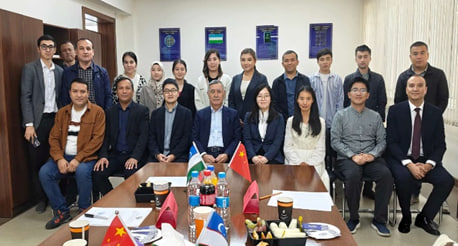
- Northwestern Polytechnical University, Xi’an (China) — defect passivation in perovskite photovoltaics; formal cooperation agreement since 2023;
- School of Materials Science and Engineering, Tianjin University (China) — Prof. Long Ye, organic solar cells and stretchable photovoltaics;
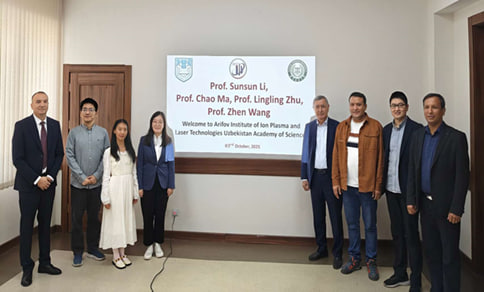
- School of Flexible Electronics, Nanjing Tech University (China) — Prof. Yonghua Chen and Prof. Sunsun Li;
- Qingdao Institute of Bioenergy and Bioprocess Technology, CAS (China) — Prof. Shuguang Wen;
- Ocean University of China (China) — internships since 2025;
- Nanjing Forestry University (China) — internships since 2025;
- Fuzhou University (China) — internships and conferences since 2025;
- Jianghan University (China) — internships since 2025;
- Xinjiang University (China) — internships and conferences since 2025;
- Institute of Physics, Azerbaijan National Academy of Sciences (Azerbaijan) — magnetron-grown nanostructured ITO and TiO₂ thin films;
- University of Chicago (USA) — Prof. J. Norris;
- Bar-Ilan University (Israel);
- ETH Zürich / Polytechnic of Zurich (Switzerland);
- Università degli Studi di Milano (Italy);
- Dongguk University, Seoul (South Korea);
- General Physics Institute (GPI) RAS / NPO “Polyus” (Russia);
- Institute of Physics, Ministry of Foreign Affairs of Belarus (Belarus).
Integration with Local Higher Education Institutions
- Ulugbek National University of Uzbekistan (NUUz);
- Islam Karimov Tashkent State Technical University (TSTU);
- Nizami Tashkent State Pedagogical University (TSPU);
- Navoi Samarkand State University (SamSU);
- Karshi State University (KarSU).
2025 Internships and International Activity
During 2025, 11 researchers from the laboratory completed internships and joint research at foreign universities.
Host institutions (2025): Northwestern Polytechnical University (China); Nanjing Tech University (China); Ocean University (China); Nanjing Forestry University (China); Fuzhou University (China); Jianghan University (China); Xinjiang University (China); Qingdao Institute of Bioenergy and Bioprocess Technology, CAS (China).
Major International Events Attended in 2025
- China–Central Asia 2025 Conference on Industry–University–Research–Application Cooperation — Xinjiang University, China, 12–13 May 2025. Speaker: V.O. Kuvondikov.
- International Symposium on Flexible Electronic Materials and Devices — Wuhan, China, 29 June 2025. Speaker: A.A. Saparbaev.
- 2025 Marine Silk Road International Conference on the Cooperation and Integration of Industry, Education, Research and Application — Fuzhou, China, 6–9 November 2025. Speaker: I.I. Tajibaev.
6. Events and Webinars / Workshops
Upcoming Events
The laboratory regularly organises the following events:
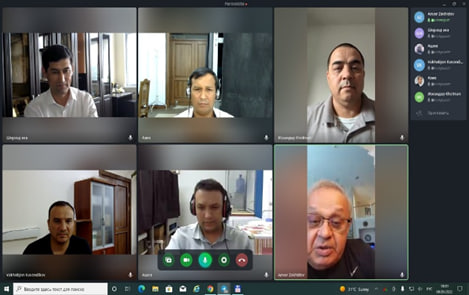
- Regular research seminars — monthly, in online format with foreign partners (Tianjin, Nanjing Tech, UT Austin);
- School for young researchers — fundamentals of perovskite and organic photovoltaics (every Wednesday);
- Annual international webinar — recent advances in photovoltaics and spectroscopy;
- Open Lab Day — for undergraduate and master’s students.